2007
Afro-American Sons and Daughters Hospital
Yazoo City
Built during the era of rigid racial segregation, the Afro-American Sons and Daughter’s Hospital served as the state’s first hospital for African Americans. When healthcare was not accessible to most African American residents, the hospital provided free healthcare to anyone in need. Founded in 1928, the hospital boasted full-service operating and surgical rooms, plus a delivery room and nursery until it closed in 1972. The building has since been lost to a fire.
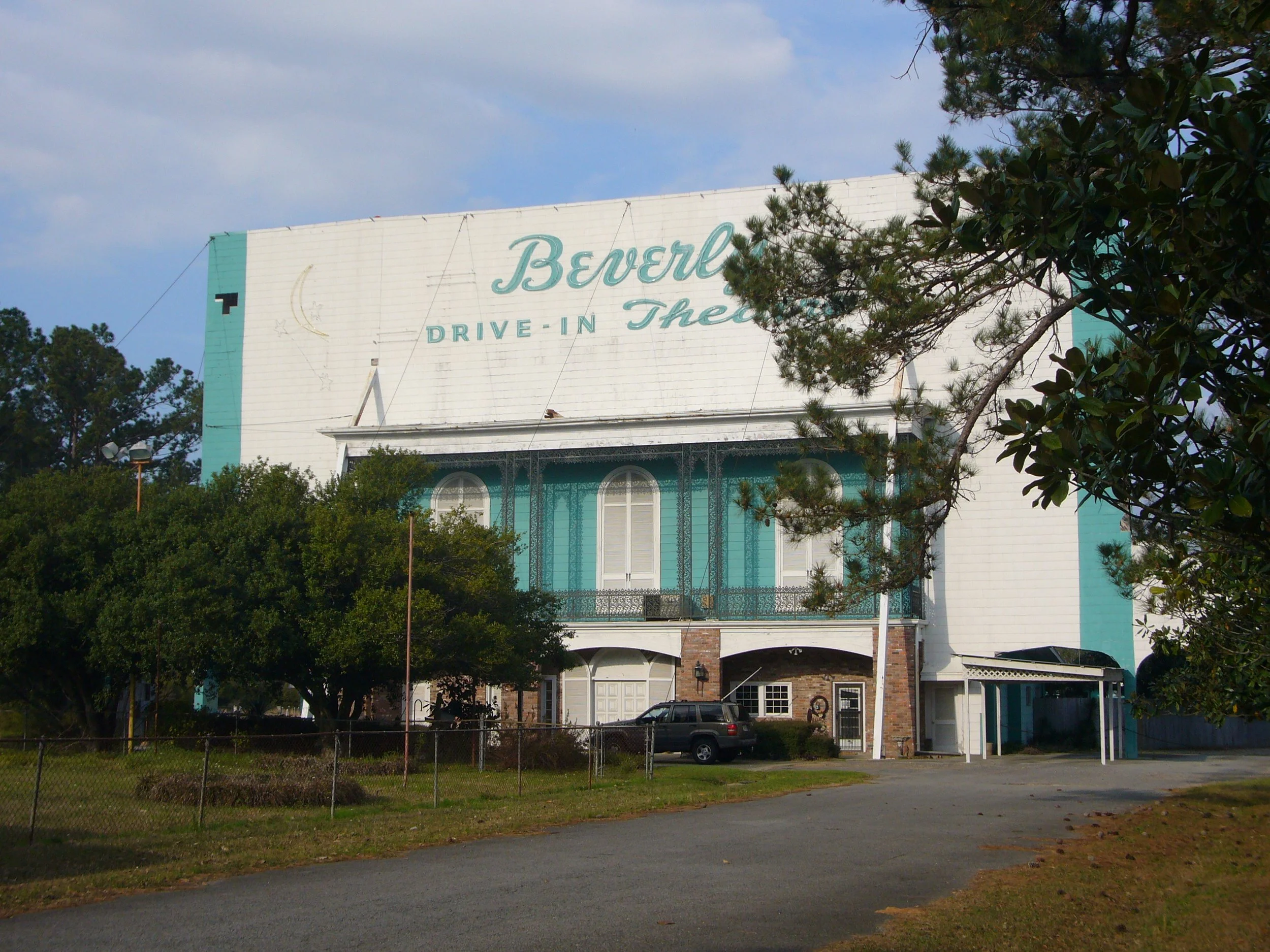
Beverly Drive-In Theatre
Hattiesburg
The Beverly Drive-In opened on May 29th, 1948 and was the second drive-in theater in the state. One of its more unique features was the owner’s residence, a three-bedroom, two- bath house with a sun porch, which was built beneath the main screen. The Beverly was in business until extensive damage due to Hurricane Katrina in 2005 caused its closure. The Beverly Drive-In was destroyed by fire in 2010.
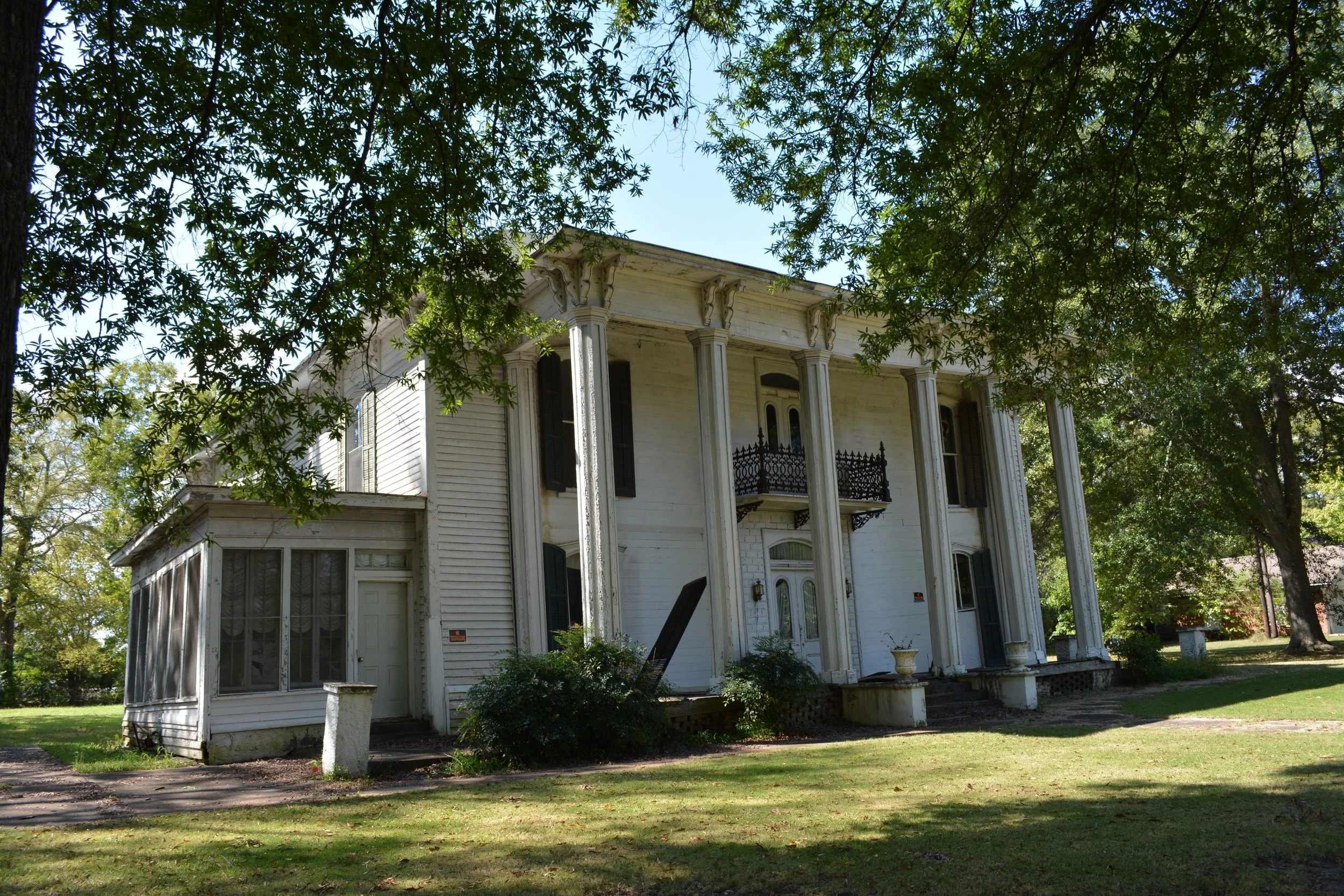
Chandler House
Okolona
The Chandler House is one of Mississippi’s rare examples of a residence combining Greek Revival and Italianate features. The earliest part of the house is thought to have been a small log cabin built in the 1850s and was later extensively remodeled in the 1870s. It remained in the possession of the Chandler family and their heirs until it was donated to the Okolona Development Foundation Charities in 2005.
Vacant for more than 25 years, the Chandler House has suffered from significant neglect and deterioration. An architect’s report estimates that full restoration will require roughly $750,000. The Foundation has secured a $50,000 Carpenter grant and raised an additional $20,000 from private donors to begin stabilization, including roof repairs, but fundraising has since slowed. The group hopes to pursue further grant funding once stabilization is complete.
Coker House (also known as “Greenwood”)
Edwards vicinity
Built in 1852 by H. B. Coker on land once known as Cotton Hill, the Coker House is the only original structure standing where the pivotal Battle of Champion Hill was fought on May 16th, 1863. Located on the southern margin of the battlefield, this one-story Greek Revival-style house sustained fire from both Federal and Confederate artillery. The cannon ball and bullets still lodged in the façade of the house serve as lasting reminders of the battle. Cal-Maine Foods, which purchased the property in 1963, donated the house to the Jackson Civil War Roundtable in 1985. Unable to complete the restoration project, the Roundtable conveyed the title to the Mississippi Department of Archives and History in 2000, which restored the house in 2009. The house is currently administered by the Mississippi Department of Archives and History, and is closed to public entry. Several interpetive displays are available on the grounds of the building.
Mannsdale-Livingston Heritage District
Madison
The Mannsdale-Livingston Heritage Preservation District is a rural historic area located along Highway 463 in Madison County which contains a concentration of historic buildings and sites that illustrate the rural heritage of Madison County from the 1840s through the 1920s. When inappropriate development threatened to erode the special historic character of rural Madison County, residents took action and convinced the board of supervisors to designate the area as a protected district and later had the district designated as a Mississippi Scenic Byway.
Today, the Mannsdale-Livingston Heritage Preservation District continues its work to safeguard this historic corridor. Preservation advocates face ongoing challenges from new development pressures and continue to work closely with residents, builders, and county officials to enforce the covenants set forth in the district’s overlay. Despite the looming concern of a proposed MDOT plan to four-lane the highway, the group remains determined to protect their district.
The district’s leadership is also exploring opportunities to expand recognition through the National Scenic Byways Program, including adding the “Gateway to History” area within the overlay district. Though the process is complex, efforts are ongoing.
Mississippi Gulf Coast
Coast
When Hurricane Katrina slammed into Mississippi’s Gulf Coast on August 29th, 2005, many historic landmarks disappeared. Gracious beachfront mansions, simple Creole cottages, bungalows and shotgun houses were lost to the storm. Many historic downtowns including Waveland, Bay St. Louis, Pass Christian, Gulfport and Pascagoula were also ravaged by wind and flood waters. There were some tremendous preservation victories following Hurricane Katrina, including the Charnley-Norwood House in Ocean Springs, Randolph School in Pass Christian and the former site of the Veteran’s Administration in Gulfport, which is now open as Centennial Plaza.
Mobile and Ohio Railroad Depot
Aberdeen
Completed around 1869, the Mobile and Ohio Railroad Depot is a vernacular Italianate structure believed to be the oldest extant railroad depot in Mississippi. The depot was threatened by deterioration and lacked funds for restoration. The Save Aberdeen Landmarks Group Inc. worked alongside city officials and the Mississippi Department of Archives and History to save the building. The Mobile and Ohio Railroad Depot is currently in stable condition and is being restored to become an event venue.
Naval Reserve Center
Jackson
The Naval Reserve Center, with its distinctive ship-like façade, opened in 1949 as a training facility for the Navy and Marine Corps and remained active until 2000, when operations were relocated to the Meridian Naval Air Station. The complex scope of the site’s rehabilitation required the adaptive reuse of the 1948 plywood-skinned post-war Naval recruiting office as the new State Record Storage Facility for the Mississippi Department of Archives and History. Located in a prominent downtown Jackson location, the main front building—an example of marine moderne architecture—has been restored and will serve as leasable office space. The World War II–era concrete barracks buildings to the rear will be renovated in Phase II to provide additional State offices.
The two existing structures are being connected through infill construction designed to accommodate state archival storage needs. This project represents a thoughtful balance of restoration, adaptive reuse, and new construction, demonstrating how large-scale site planning can successfully integrate historic preservation with contemporary function.
The Picayune Colored Gymnasium
Picayune
Built in 1930 by local businessmen George Pickett and William “Bo” Sewell, the Picayune Colored Gymnasium served the African American community as a recreational and entertainment center for sixty years. The two-story cinder-block building contained the only full-sized basketball court and the only indoor recreational facility available to African Americans on the Gulf Coast in the 1930s and 1940s. It was converted into a nightclub in 1960 and later sat vacant for many years. The Picayune Colored Gymnasium has been demolished, although the exact date of demolition is unknown.
Spring Hill Missionary Baptist Church
Tupelo
Completed in 1921, Spring Hill Missionary Baptist Church housed the first African American congregation in Tupelo for over 80 years. It is one of the oldest surviving church buildings in Tupelo, which lost many landmarks in the devastating tornado of 1936. When a larger new church was constructed next door, the future of the historic church building was uncertain. However, Spring Hill Missionary Baptist Church has committed to using and maintaining the historic building.